When Maruti Suzuki moves, the market pays attention. Not because it makes the fastest cars. Not because it makes luxury cars. But when Maruti launches something at scale, it changes buying patterns across India.
The upcoming e-Vitara is important for that reason alone.
This is not just another electric SUV announcement. This is Maruti stepping into the serious EV space after years of waiting, observing, and studying the market. And that delay may actually work in their favor.
Let’s break it down calmly and clearly, what it is, what it is not, and why it matters.
Not Just a Brezza With a Battery
One common misunderstanding floating around online is that the e-Vitara is simply an electric version of the Brezza. That is not accurate.
The e-Vitara is expected to be built on a dedicated electric vehicle platform developed under Suzuki’s global EV strategy, reportedly in collaboration with Toyota. A dedicated EV platform means the car is designed from the ground up to carry a battery pack under the floor. That improves weight balance, interior space, and safety.
This is different from converting a petrol car into electric form.
That detail matters.
Because it means Maruti is not experimenting. It is investing.
Design: More Global Than Traditional
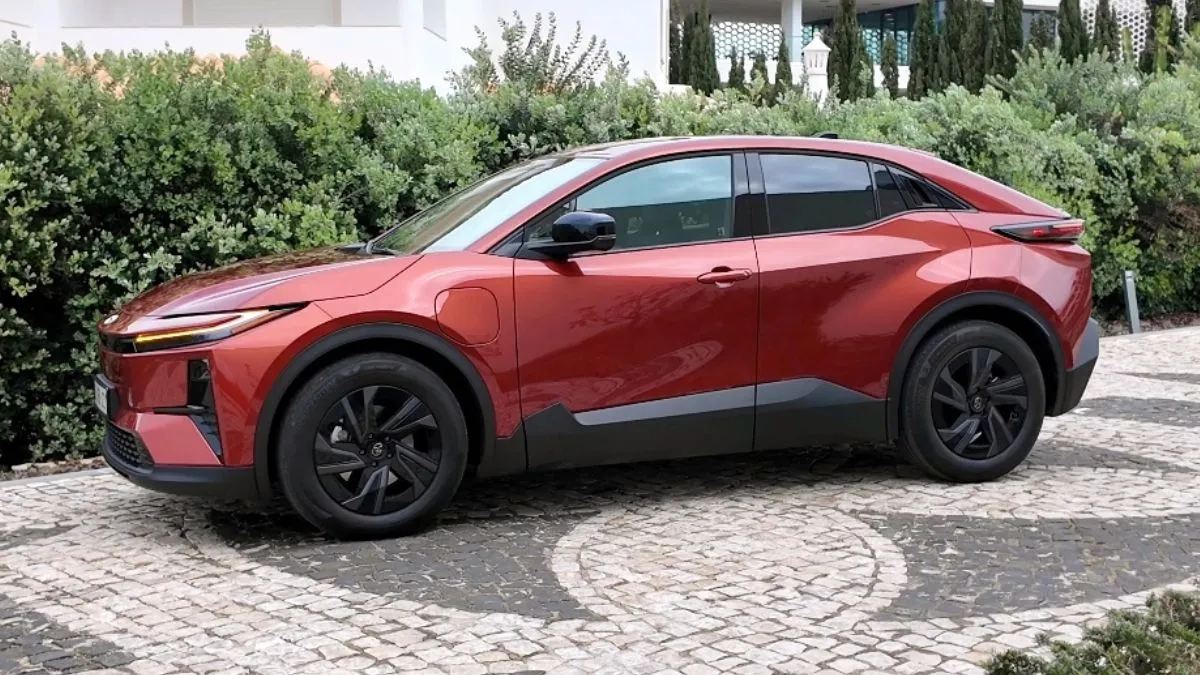
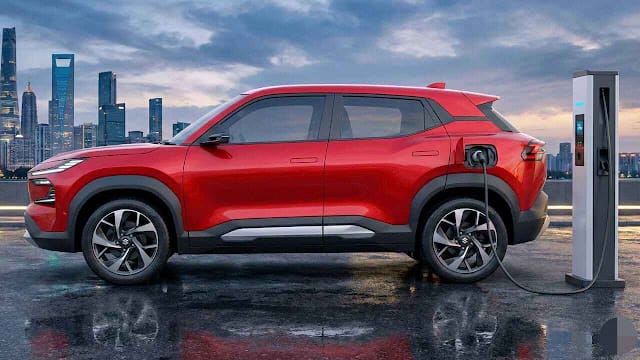
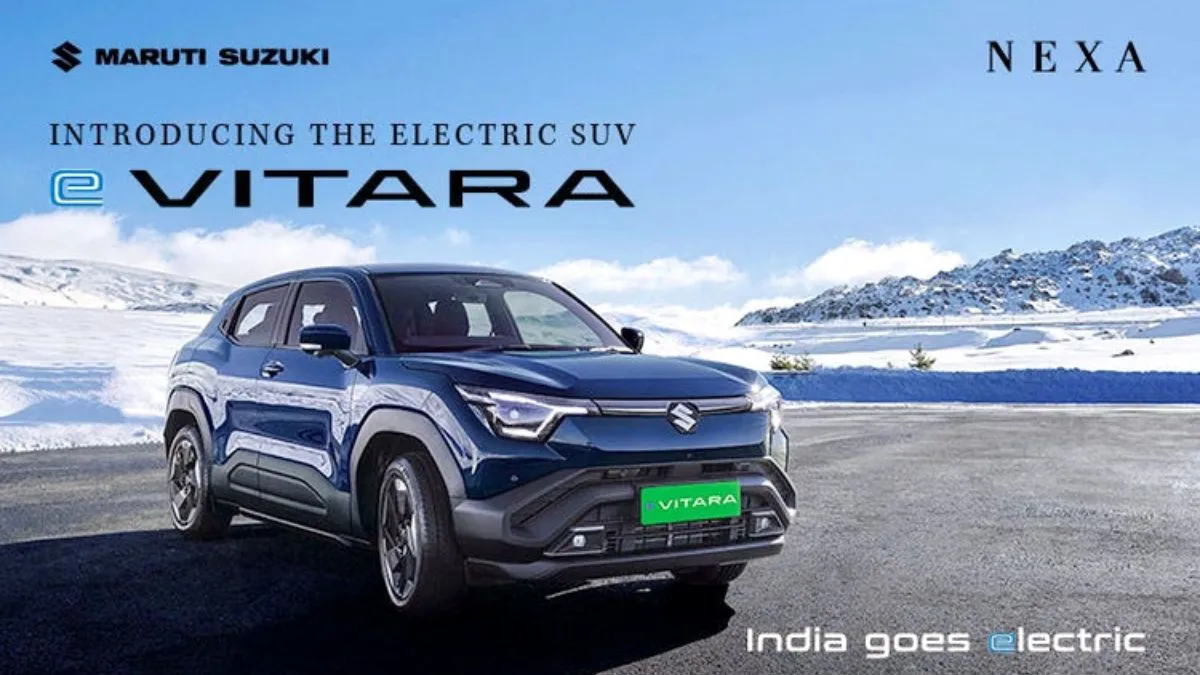
From the early concept previews and test mules, the e-Vitara looks more international than typical Maruti SUVs.
The design language appears sharper and more futuristic compared to the current Brezza. Expect:
- Closed front grille (typical EV design)
- Slim LED lighting elements
- Chunky SUV stance
- Wider proportions
Inside, early previews suggest a much more modern dashboard layout. Likely features include a large central touchscreen, digital instrument cluster, and better material quality than current entry SUVs.
Maruti understands something very simple: EV buyers expect a modern cabin. They associate electricity with future technology. If the interior feels outdated, the car loses appeal instantly.
Battery and Range: What Can We Realistically Expect?
Battery and Range The Official Numbers Maruti has officially confirmed two battery options, and they are spot on for Indian needs.
- 49 kWh Battery: This is the entry-level pack. It has an ARAI-certified range of 400 km. In the real world, expect around 310-330 km, which is perfect for city use.
- 61 kWh Battery: This is the one for highway drivers. It claims a range of 535 km. Realistically, you should get close to 420-440 km on a full charge.
The best part? The top variant gets All-Wheel Drive AWD, making it a proper SUV, not just a city car.
Of course, range depends heavily on driving style, AC usage, and road conditions. Highway driving at high speed reduces range. Calm city driving improves it.
For most urban users driving 30–60 km daily, this range is more than enough. The average Indian car covers less than 40 km per day.
So range anxiety? Mostly psychological for city users.
For long road trips? Charging stops will still be part of the journey.
Fast charging is expected to bring the battery from around 10% to 80% in under an hour, depending on charger capacity. Home AC charging will likely take 6–8 hours overnight.
Performance: Smooth Over Aggression
Exact power figures are still expected to be revealed closer to launch. However, if it follows global EV norms in this segment, output may sit around 130–160 bhp.
Electric cars feel quicker than their numbers suggest because torque is delivered instantly. There is no gear shifting. No waiting. Just smooth push.
This makes city driving effortless.
It may not be a performance SUV, but it should feel more responsive than similarly powered petrol compact SUVs.
And then there is silence. EV silence is something you notice the first time you drive one. The absence of engine vibration changes the entire driving experience.
Features and Safety
Maruti knows it cannot enter the EV space with basic equipment.
Expect modern essentials such as:
- Large infotainment system with smartphone connectivity
- Digital instrument display
- Multiple airbags
- Electronic stability control
- Advanced driver assistance features (possibly in higher variants)
Safety expectations are higher in EVs because buyers perceive them as premium products. Maruti cannot afford to cut corners here.
Price Expectations: The Big Question
Price They Actually Shoked Us We expected it to be expensive, but Maruti played a masterstroke. The e-Vitara starts at an attractive ₹15.99 Lakh ex-showroom for the 49kWh variant. The larger 61kWh variant starts around ₹18.50 Lakh, and the fully loaded AWD version touches ₹20 Lakh.
The BaaS Twist Battery as a Service Just like MG, Maruti has introduced a ‘BaaS’ model. You can buy the car for just ₹10.99 Lakh without the battery, and then pay a monthly subscription fee based on how much you drive. This brings the upfront cost down to the level of a petrol Brezza.
Anything significantly below that would be a market shock. Anything significantly above that would limit mass appeal.
To understand the competition:
The Tata Nexon EV currently dominates the Indian EV compact SUV segment. It offers multiple battery options and established charging compatibility.
Meanwhile, Hyundai is preparing to expand its electric lineup, and reports indicate a localized electric version of the Creta may enter the market, often referred to as the Hyundai Creta Electric in media discussions.
The e-Vitara must position itself carefully between affordability and perceived quality.
Why This Car Matters More Than Others
Here is the deeper layer.
Maruti has the largest dealership and service network in India. That changes EV adoption dynamics.
Many buyers hesitate to switch to electric because they worry about service support and battery issues. If Maruti brings nationwide EV servicing capability, trust levels increase dramatically.
Also, production is expected from Gujarat, possibly with export plans to Europe and other markets. That means global compliance standards will likely influence build quality and safety features.
This is not a small experiment. It is a long-term strategy move.
Ownership Costs: The Real Advantage
EV economics make sense when used correctly.
Electricity per kilometer is generally cheaper than petrol. Maintenance is also lower because EVs have fewer moving parts, no engine oil, fewer filters, no clutch.
However, battery warranty terms will be important. Most EV manufacturers offer around 8 years of battery warranty. That is expected here, too.
Long-term resale value remains an open question across the EV industry, not just for this model. The market is still evolving.
Should You Wait for It?
If you:
- Drive mostly in the city
- Have access to home charging
- Plan to keep the car for 6–8 years
- Want lower running costs over time
Waiting could make sense.
If you:
- Do frequent long-distance highway drives
- Cannot install home charging
- Change cars every 3 years
Petrol or hybrid may still be more practical today.
The key is matching the vehicle to your usage pattern, not just following trends.
Should You Actually Buy It?
The e-Vitara is not about being the fastest or the flashiest electric SUV.
It is about scale.
If Maruti prices it correctly and ensures good real-world range, this could become the turning point for mainstream EV adoption in India.
Not because it is revolutionary.
But when India’s largest car brand enters the electric space seriously, the market shifts.
The next 12–18 months will be interesting.
Electric mobility in India is no longer a future idea. It is slowly becoming an infrastructure reality.
And the e-Vitara might be one of the cars that pushes it from early adoption into mass acceptance.